The International Association of Canine Professionals (IACP) supports the humane treatment, ethical training, and responsible stewardship of all dogs. As an organization representing experienced professionals across training, behavior, sport, and working dog disciplines, we advocate for policies that are grounded in practical expertise, balanced welfare standards, and enforceable outcomes.
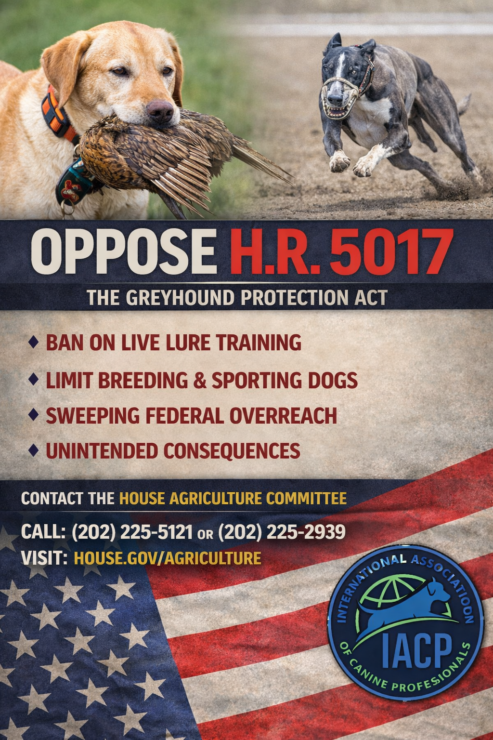
H.R. 5017, the Greyhound Protection Act of 2025, a bill that would most likely not advance on its own, has been inserted into the 2026 Farm Bill and has now advanced in the House Committee on Agriculture. The bill proposes sweeping federal restrictions on commercial greyhound racing and associated activities, including breeding, transport, and training practices.
While the intent of this legislation is to address legitimate animal welfare concerns, the IACP has significant concerns regarding the scope, precedent, and potential unintended consequences of this bill.
Key Concerns
1. Broad Federal Overreach into Canine Activities
The bill extends beyond racing to regulate training methods, breeding, and transport. This raises concerns about future expansion into other lawful canine activities, including sport, working roles, and professional training practices.
2. Lack of Distinction Between Welfare Violations and Responsible Practices
The legislation does not adequately differentiate between negligent or abusive operations and responsible professionals who prioritize canine health, conditioning, and humane care.
3. Risk of Unintended Consequences
Broad prohibitions may:
- Drive activities underground, reducing oversight
- Negatively impact responsible breeders and trainers
- Limit opportunities for structured, well-regulated canine sport and enrichment
4. Enforcement Practicality
Effective animal welfare policy requires clear, enforceable standards. The proposed framework may create ambiguity in enforcement and strain regulatory resources.
Training-Specific Concerns: Use of Live Lures
Dog trainers across multiple disciplines—including hunting, field work, and certain performance sports—have expressed concern regarding the bill’s prohibition on the use of live animals as lures. While the IACP unequivocally opposes inhumane or reckless use of any animal, it is important to recognize that, in some contexts, carefully regulated exposure to live game is a longstanding and functional component of training for hunting and working dogs.
For example, retriever training programs may incorporate controlled exposure to live birds (such as ducks or pheasants) to develop proper mouth habits, steadiness, and humane retrieval skills. Pointing and flushing dog training often relies on live game birds to teach scent discrimination, pointing behavior, and controlled pursuit within regulated environments. Hound and tracking dog training may involve exposure to live quarry or scent trails derived from live animals to build trailing accuracy and decision-making in real-world conditions.
Additionally, in some wildlife management and falconry-adjacent contexts, dogs are trained to work in coordination with handlers and other animals, requiring a level of realism that artificial substitutes cannot fully replicate. These practices are typically governed by state wildlife regulations, licensing requirements, and established best practices designed to ensure humane treatment of both the dog and the quarry species.
These applications are not recreational cruelty—they are purpose-driven, skill-based training methods essential for developing dogs that can perform their roles effectively and humanely in the field. In many cases, appropriate exposure to live game reduces the risk of prolonged chases, mishandling of quarry, or ineffective performance that could ultimately result in greater harm.
A blanket federal prohibition risks eliminating legitimate, regulated training applications without distinguishing them from abusive practices. The IACP urges policymakers to clearly differentiate between unethical use and structured, humane, and professionally guided training scenarios, and to consult with experienced professionals in hunting, working dog, and conservation communities before restricting these activities.
IACP Position
The IACP supports strong, enforceable animal welfare protections, including:
- Clear standards of care and humane treatment
- Accountability for neglect and abuse
- Oversight mechanisms that are practical and evidence-based
However, we oppose overly broad federal legislation that does not incorporate input from qualified canine professionals and risks unintended harm to responsible sectors of the dog community.
Call to Action: Engage the House Committee on Agriculture
H.R. 5017 has been referred to the House Committee on Agriculture, which plays a critical role in reviewing and shaping this legislation.
We strongly encourage canine professionals, stakeholders, and concerned citizens to engage directly with committee members.
How to Take Action
1. Contact the Committee Leadership
- Chairman: Glenn ‘GT’ Thompson
Phone: (202) 225-5121
Website: https://thompson.house.gov - Ranking Member: David Scott
Phone: (202) 225-2939
Website: https://davidscott.house.gov
2. Contact Your Representative
Ask your U.S. Representative—especially if they serve on the Agriculture Committee—to review H.R. 5017 with input from canine professionals.
Find your Representative: https://www.house.gov/representatives/find-your-representative
3. Provide Professional Insight
When reaching out:
- Share your professional background and experience
- Explain how broad regulatory language may impact responsible training, breeding, or canine sport
- Advocate for targeted, enforceable welfare standards rather than blanket prohibitions
4. Request Stakeholder Inclusion
Encourage lawmakers to consult with:
- Professional trainers
- Behavior specialists
- Working and sporting dog organizations
- Veterinary and welfare experts with practical field experience
Conclusion
The IACP urges policymakers to pursue balanced, informed, and enforceable legislation that protects canine welfare without compromising responsible professional practices.
Effective policy must be shaped not only by concern—but by experience, expertise, and a comprehensive understanding of dogs and their roles in society.