
Obedience Doesn’t Drain Energy — It Organises It
Written by: Jeffery Ong
Obedience doesn’t drain energy.
It metabolises it.
Most dogs don’t have “too much energy.”
They have energy with no direction, no outlet, no resolution.
That energy doesn’t live in the legs — it lives in the nervous system.
A dog can run for an hour and still feel unsettled.
Why?
Because nothing asked the dog to organise itself.
Obedience does. Not obedience as robotic compliance — but obedience as structured dialogue.
When a dog works through a clear routine:
•it must regulate arousal
•it must hold position under motion
•it must process information instead of reacting to it
That process consumes energy at the neurological level, not just the physical one. This is why calm follows clarity.
Random exercise amplifies momentum.
Structure converts momentum into resolution.
That’s the difference.
A well-built obedience routine creates cycles: engage → resolve → disengage
Most dogs never learn the disengage part
They’re either “on” or exploding.
Obedience teaches the dog how to come back to neutral —
and neutrality is where real calm lives.
This isn’t about suppression.
It’s not about control.

It’s about teaching the dog how to carry energy without leaking it.
A dog that understands expectation doesn’t burn energy fighting uncertainty.
So when obedience works, what you’re seeing isn’t a tired dog.
You’re seeing:
•a regulated nervous system
•organised drive
•energy that has completed its loop
That’s not obedience for behaviour.
That’s obedience for state of mind.
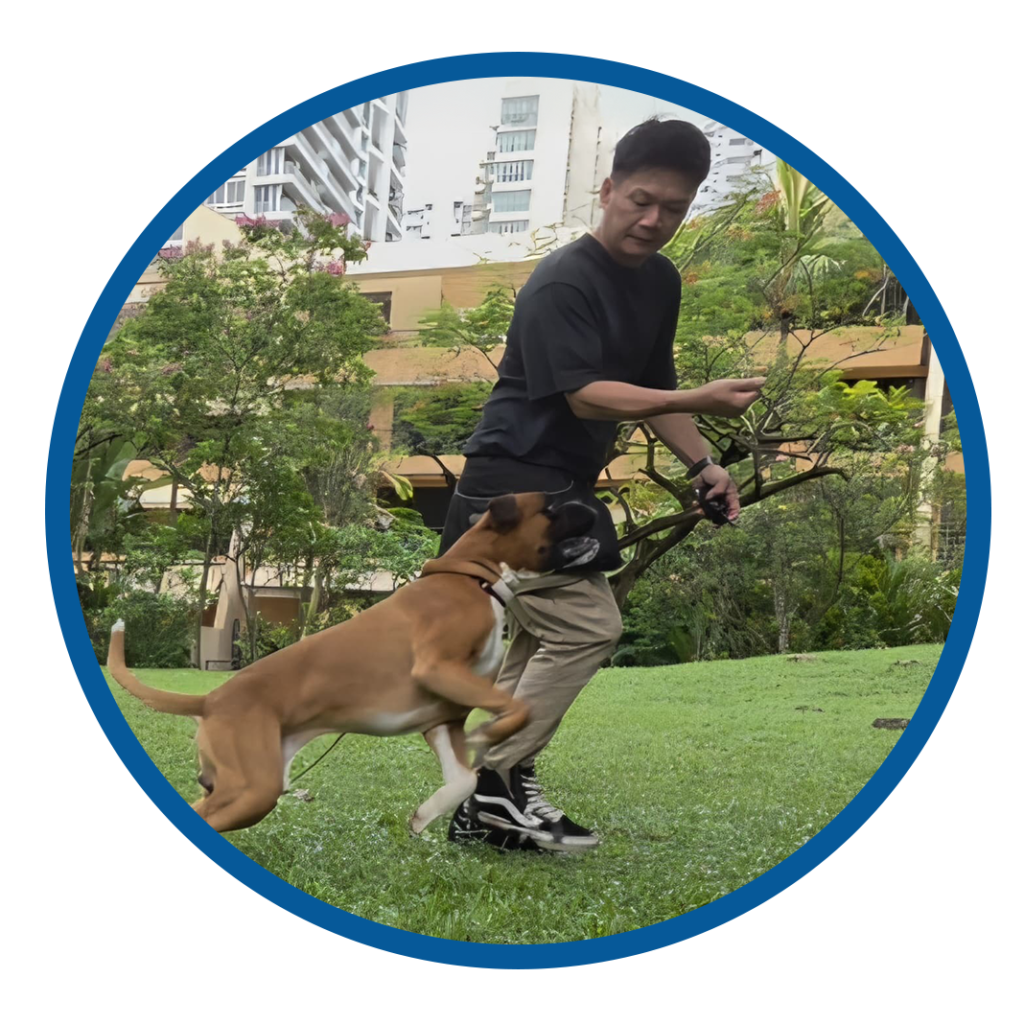
Author Bio: Jeffery Ong
Jeffery Ong is a professional dog trainer, educator, and the founder of K9 World based in Singapore, with nearly 30 years of applied experience since 1995 across companion, working, and performance dogs. His work emphasises applied behavioural science, handler competency, and agency-driven training, integrating evidence-informed frameworks with real-world application. Jeffery is an International Honoree and Ambassador with the International Association of Canine Professionals (IACP) and contributes to international discourse on humane, balanced, and competency-based dog-training standards.
Also in this issue:
How Better Client Communication Can Prevent Burnout in Dog Trainers
February 6, 2026 No Comments
Read More »